The honest version of this comparison starts with a number most articles bury: the median home in Franklin costs roughly twice what the median home in Murfreesboro costs. Everything else in this comparison flows downhill from that gap. The two cities sit on opposite sides of Nashville (Franklin southwest on I-65, Murfreesboro southeast on I-24), serve different buyer profiles, and feel like different places to live, not two flavors of the same suburb.
Here is how the decision actually breaks down for a relocating family.
The 30-second answer
Choose Franklin if your priorities are Williamson County Schools, long-term property value in one of the strongest suburban markets in the South, walkable historic downtown character, and you have the budget for an entry point around the $600s and a median near $900K.
Choose Murfreesboro if your priorities are getting the most house per dollar in Middle Tennessee, a sub-$500K budget that still buys new construction, proximity to a true college town (MTSU), and you can tolerate a longer, less predictable commute into Nashville.
Housing: the defining gap
Franklin: median sale price has been running roughly $850K to $920K depending on the measure, as of spring 2026. Entry-level townhomes and older condos start in the $400s to $500s, but detached single-family under $650K is scarce. New construction in communities like Berry Farms and southeast Franklin typically starts in the $700s.
Murfreesboro: median sale price around $425K to $440K as of spring 2026. New construction from national builders is widely available in the $350s to $500s, and resale inventory under $400K still exists in established neighborhoods.
Put plainly: the same monthly payment that gets you a 1,900-square-foot townhome in Franklin gets you a 3,000-square-foot new build with a yard in Murfreesboro. If maximum house per dollar is the deciding factor, Murfreesboro wins and it is not close.
What Franklin buys with that premium is appreciation history, scarcity, and school zoning. Williamson County's growth controls keep supply tight, which has protected values through rate cycles that flattened other markets. Murfreesboro and Rutherford County have approved far more volume building, which keeps prices accessible but also means your resale competes with the next phase of new construction down the road.
Schools: the reason most people pay the Franklin premium
Franklin is zoned to Williamson County Schools (plus the Franklin Special School District for some K-8 zones inside the city), which is consistently the top-performing large district in Tennessee on state report card data.
Murfreesboro is served by Rutherford County Schools plus Murfreesboro City Schools for elementary grades. Both have solid individual schools, and the gap is narrower at specific schools than district averages suggest. But on aggregate outcomes, funding per student, and college placement, Williamson County leads, and that gap is the single biggest driver of the housing price difference between the two cities.
A practical note for buyers: in both counties, zoning is reviewed periodically and specific school assignments should be verified against the district's current zoning maps before any purchase. See our Williamson County schools guide for how Franklin zoning works.
Commute and location
Franklin to downtown Nashville: roughly 21 miles up I-65, 25 to 40 minutes depending on the hour. The Cool Springs employment corridor means many Franklin residents do not commute to Nashville at all.
Murfreesboro to downtown Nashville: roughly 34 miles up I-24, and this is the comparison's hidden cost. I-24 between Murfreesboro and Nashville carries some of the worst congestion in the state, and peak-hour drives of 60 to 75 minutes are common. If a Nashville office requires daily attendance, this commute deserves a trial run at 7:30 a.m. before signing anything.
Murfreesboro counters with its own employment base: MTSU (the state's largest undergraduate university), the National Guard, healthcare, and a substantial retail and logistics economy. Like Franklin, a large share of residents work locally.
Taxes and cost of living
Both cities benefit from Tennessee's no-income-tax structure. Property taxes differ: Williamson County's effective rate on a Franklin home runs roughly 0.5 to 0.6 percent of market value, while Rutherford County plus Murfreesboro city rates produce a somewhat higher effective rate. But because Murfreesboro home values are half of Franklin's, the actual annual tax bill on a typical Murfreesboro home is meaningfully lower. Run the math on real listings using the method in our property tax guide, and see the cost of living breakdown for the full picture.
Day-to-day costs (groceries, dining, services) are modestly cheaper in Murfreesboro, though the difference is small compared to the housing gap.
Character and lifestyle
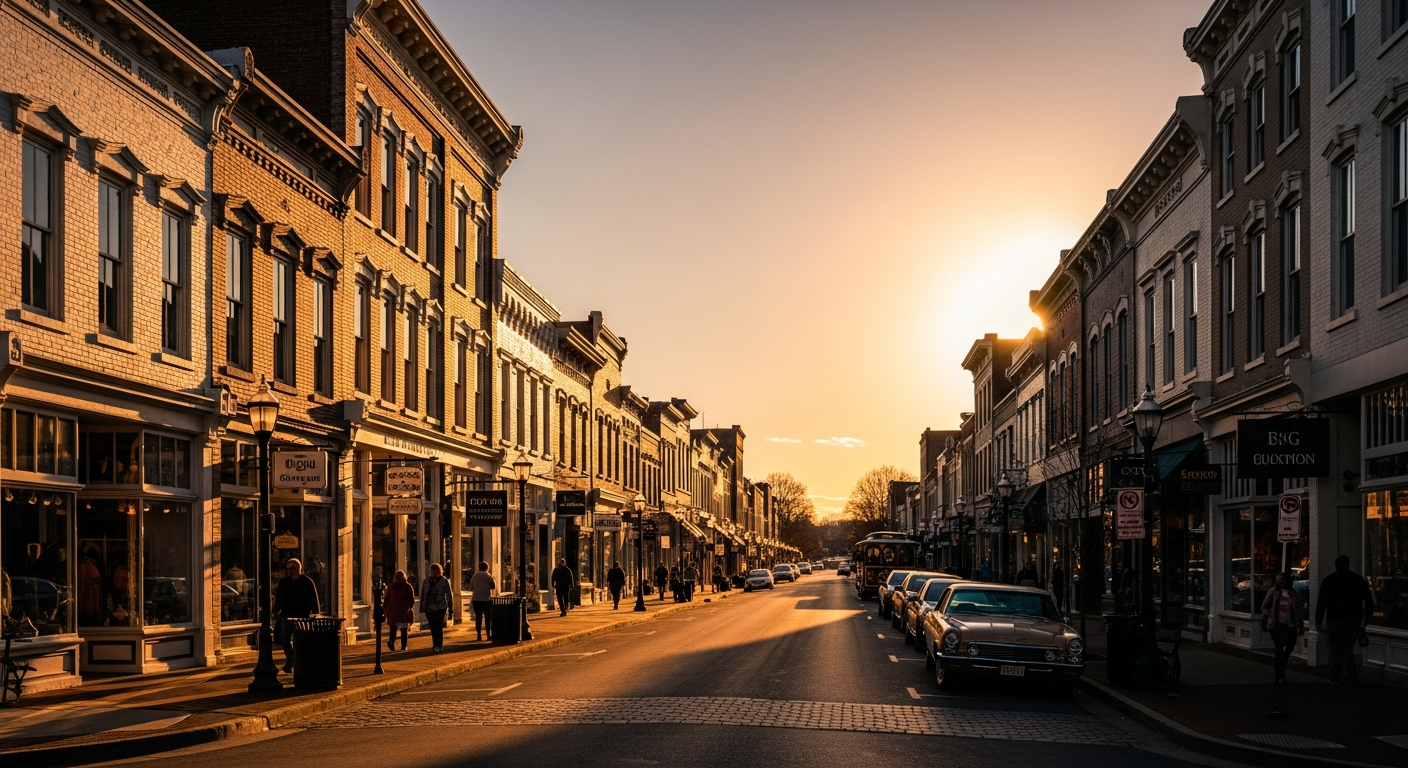
Franklin's identity is its historic Main Street, the Civil War sites, the festival calendar (Main Street Festival, Pumpkinfest, Dickens of a Christmas), and an affluent, polished suburban culture. Dining and retail have matured to the point where driving into Nashville is optional.
Murfreesboro's identity is a college town wrapped in a fast-growing suburb. The public square has its own historic charm, Stones River National Battlefield anchors the city's green space, and MTSU brings 20,000-plus students, Division I athletics, and a year-round events calendar. The retail spine along Medical Center Parkway (The Avenue, Fountains at Gateway) covers most needs.
The texture difference is real: Franklin reads upscale and curated; Murfreesboro reads younger, bigger, and more in-progress. Neither is wrong. They are different products.
Who should choose Franklin
- Families buying specifically for Williamson County Schools
- Buyers who prioritize long-term value protection over square footage
- Households with Cool Springs or Franklin-based employment
- Anyone who wants walkable historic-downtown life within reach
Who should choose Murfreesboro
- Buyers with a firm budget under $500K who want new construction
- First-time buyers priced out of Williamson County entirely
- Households tied to MTSU, Rutherford County employers, or southeast-side logistics jobs
- Anyone who would rather bank the $400K difference than own the Franklin address
The middle path
If this comparison leaves you torn, the towns between the two price points are worth a look: Spring Hill and Nolensville both offer newer housing below Franklin prices while keeping a foot in (or near) Williamson County. Start with our Franklin vs Spring Hill and Franklin vs Nolensville comparisons.
Still weighing the two?
Considering a move to Middle Tennessee? Talk through the details with a Franklin resident. Free 30-minute call, no pitch.
Book a free Franklin relocation call
Related reading
- Cost of Living in Franklin, TN
- Williamson County Schools Guide
- Franklin TN vs Spring Hill
- Franklin TN Property Taxes
Considering a move to Franklin?
Talk through the details with a Franklin resident. Free 30-minute call, no pitch.