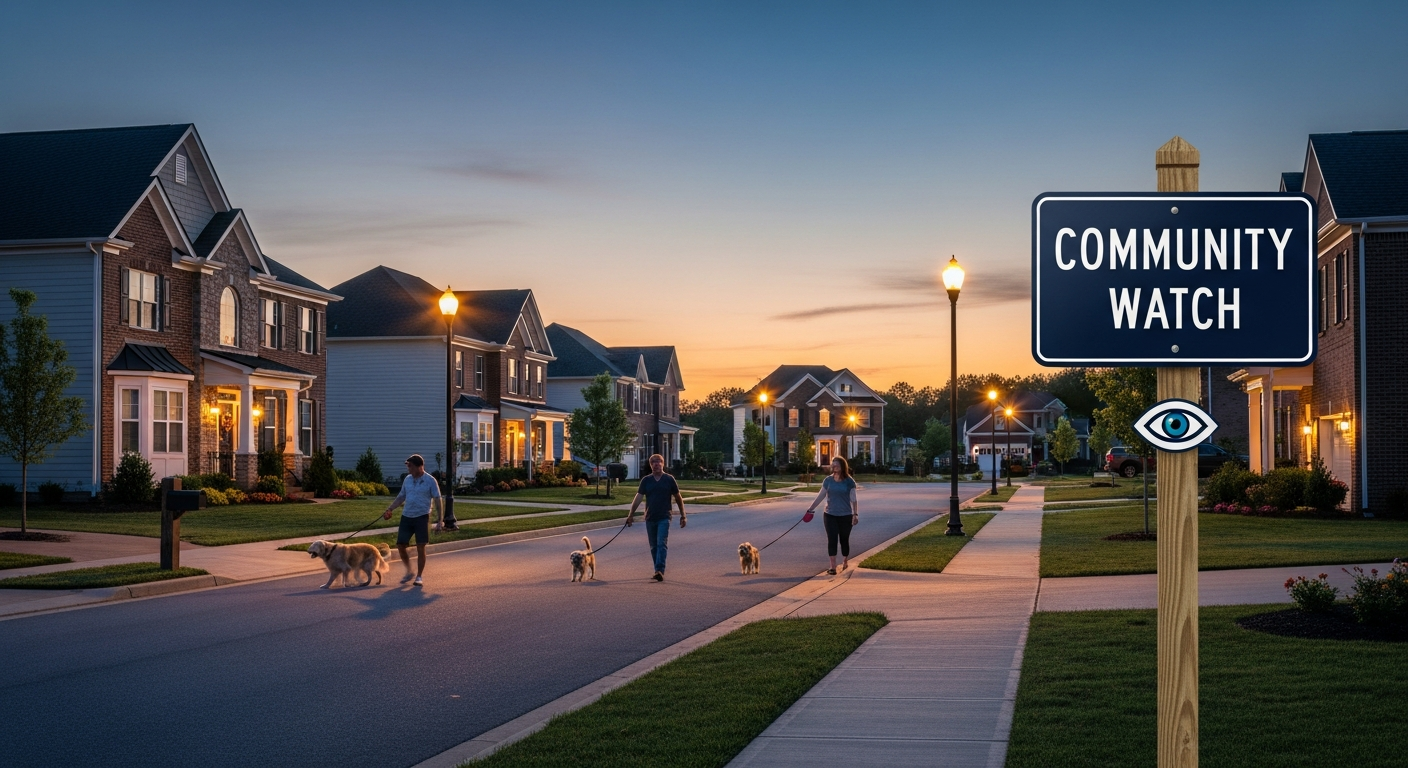
When families research moving to Franklin, safety consistently ranks in the top three decision factors. "Is it safe?" is usually the first conversation. The answer matters because it determines whether families feel comfortable letting kids walk to school, playing in parks unattended, and building lives around community activity.
Here's what the data shows and what residents actually experience.
The Data
Franklin's crime rates are genuinely low by any meaningful comparison:
- Violent crime rate: 1.2 per 1,000 residents (Nashville average: 7.8; national average: 4.0)
- Property crime rate: 8.9 per 1,000 residents (Nashville average: 29.1; national average: 24.5)
- Overall crime: Roughly 80% lower than Nashville, 75% lower than national average
These aren't marginal differences. Franklin is measurably significantly safer than both Nashville and national averages.
The Context Matters
Crime statistics are meaningful but require context. Franklin is:
-
Affluent — Median household income $108,000 (national average $68,000). Affluence is genuinely correlated with lower crime.
-
Suburban — Suburban areas are statistically safer than urban areas. This reflects resource concentration and density factors, not necessarily community investment in safety.
-
Actively policed — The Franklin Police Department is well-staffed relative to population. Response times are fast. Visible police presence is regular.
-
Homogeneous — Demographic homogeneity correlates with lower crime rates for complicated sociological reasons. Franklin is predominantly white and affluent.
Separating genuine safety infrastructure from demographic correlation is important but complex. The honest answer: Franklin is genuinely safe, and some of that safety reflects active investment (policing, infrastructure), and some reflects demographics.
What This Means Practically
Violent crime is rare. Murders, assaults, and robberies are infrequent. Families don't experience violent crime as a factor in daily life. The anxiety of personal safety is low.
Property crime exists but is limited. Vehicle break-ins happen. Catalytic converter theft has increased. Package theft from porches occurs. But these are occasional property crimes, not systematic threats.
Kids walk places unattended. This is genuinely common. Kids walk to school, ride bikes unsupervised, play in parks without adults. The community assumes this is safe, and the statistics support it.
Community feels safe. Walking downtown at night feels safe. Parking lot safety isn't a concern. The ambient anxiety level is low compared to higher-crime areas.
What Residents Actually Say
Families relocating specifically for safety cite Franklin as exceeding expectations. The low crime combined with the small-town feel creates genuine peace of mind.
Parents consistently mention being able to let kids walk to parks and school without the anxiety management required in higher-crime areas. This matters more to families than statistics alone would suggest.
Long-term residents report that the safety record has held despite population growth, though they acknowledge crime gradually increasing (from extremely low baselines).
The Honest Caveats
No place is crime-free. Franklin has crime. Burglaries happen. Car break-ins occur. Isolated theft and minor crimes exist. The difference is frequency and severity.
Affluence and homogeneity aren't universally positive. Low crime statistics partly reflect that crime tracks poverty. Franklin's low crime partly reflects that it's affluent and homogeneous. This is important context but doesn't diminish that safety is real.
Assumptions can create blind spots. In very-low-crime communities, there's sometimes assumption that danger is absent — potentially making people careless. The actual crime rate is low, but not zero, and situational awareness still matters.
Growth will likely increase crime. Franklin is growing rapidly. Crime rates, even in the safest communities, tend to increase with population density. The baseline is low enough that meaningful increase wouldn't necessarily create unsafe conditions, but the trend is worth noting.
The Comparison Context
| Metric | Franklin | Nashville | US Average | |--------|----------|-----------|-----------| | Violent crime per 1,000 | 1.2 | 7.8 | 4.0 | | Property crime per 1,000 | 8.9 | 29.1 | 24.5 | | Safety rank (state) | Top 5% | Bottom 15% | Average |
The Bottom Line
Franklin is genuinely safe. Not "safe for a suburb" or "safe relatively" — genuinely safe by any reasonable standard. Violent crime is rare. Property crime is limited. The lived experience is of a community where safety isn't a primary concern.
This is one of the few relocation factors where Franklin's reputation is essentially accurate. If safety is your primary concern in choosing where to relocate, Franklin delivers on that priority clearly.
Related reading:
Thinking about moving to Franklin?
Relocating is a huge decision. Get in touch with a local expert who can give you the honest, unfiltered truth about living here.
Speak to a Local Expert