Moving to Franklin TN from Nashville: When Leaving the City Makes Sense (2026)
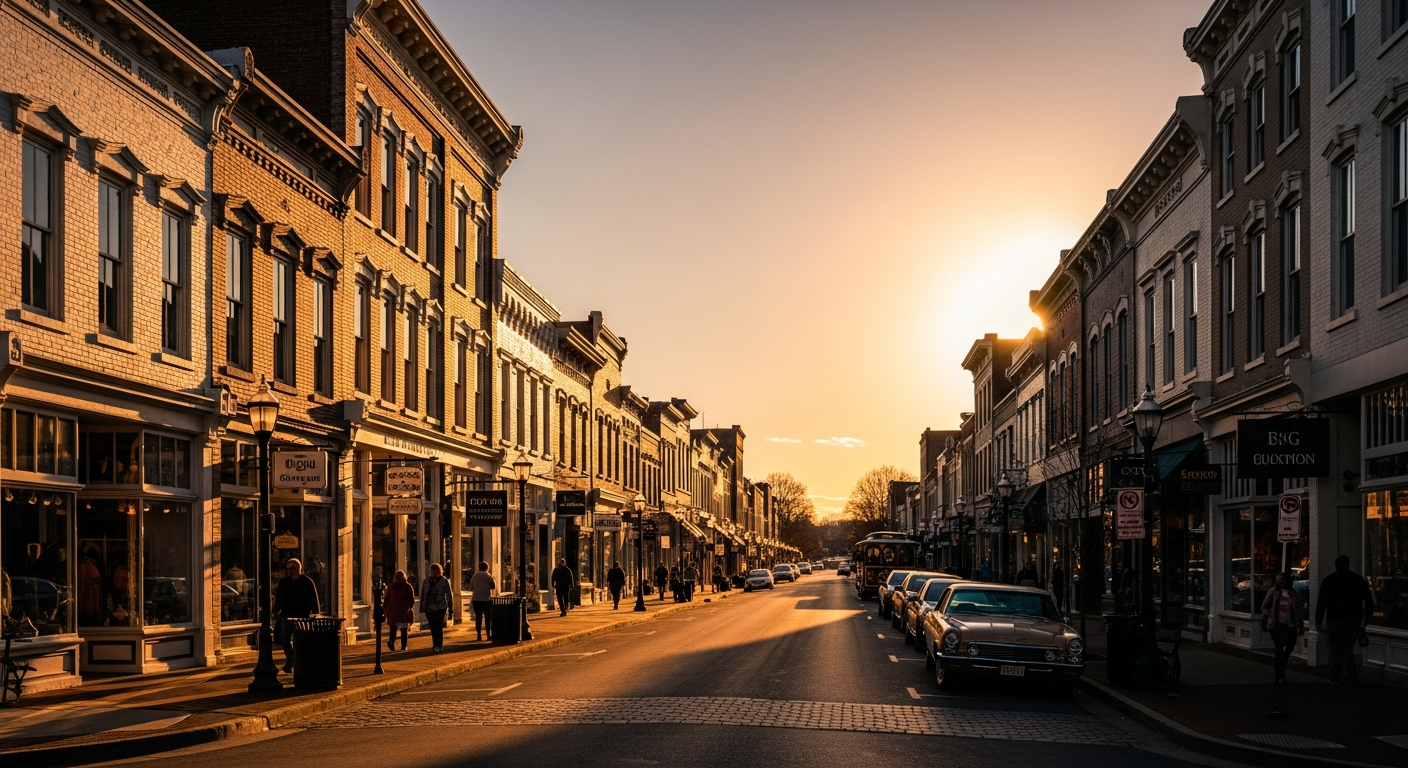
Moving to Franklin TN from Nashville: When Leaving the City Makes Sense (2026)
The most common Franklin relocation is not from California or New York. It is the 20-mile move down I-65 from Davidson County, usually somewhere between a first kid's second birthday and a fifth grader's school decision. This guide is for that move: what actually changes when you cross the county line, what it costs, what you give up, and the cases where staying in Nashville is the better call.
Why this move happens
Three drivers come up over and over, and they are worth naming plainly.
1. The school decision. Metro Nashville Public Schools is a big urban district with genuine bright spots (academic magnets like Hume-Fogg and Martin Luther King Jr. rank among the state's best) and a lottery system that means your zoned option and your preferred option are often different schools. Williamson County Schools is a suburban district where the zoned school is, for most families, the school you would have picked anyway. Families pay the Franklin premium to remove the lottery variable. The private-school alternative in Nashville (commonly $15K to $35K per child per year) makes the Williamson math look different too: two kids in private school for ten years can exceed the entire price gap between a Nashville and a Franklin house.
2. The space equation. Davidson County's close-in neighborhoods (12South, Sylvan Park, East Nashville, Green Hills) price detached family homes from the $700s well into the $1M-plus range, often on small lots with older systems. Franklin's $800s and $900s buy newer construction, bigger footprints, and yards. On price per square foot of recent-build family housing, Franklin frequently comes out comparable or better than the Nashville neighborhoods this buyer is leaving.
3. The tax line. Both counties enjoy Tennessee's lack of state income tax, but property taxes differ meaningfully. Davidson County's Urban Services District rate produces an effective rate noticeably higher than Williamson County's roughly half-percent effective rate. On a $900K home, the annual difference typically runs in the low thousands of dollars, year after year. The mechanics are in our property tax guide.
What you give up
This guide does not pretend the move is free. Leaving Nashville costs you things that mattered when you chose the city.
Proximity culture. The 8-minute drive to a chef-driven dinner, a show at the Ryman, a Preds game, or a friend's porch becomes 35 to 50 minutes each way. Franklin's own dining scene has matured to the point where weeknights are covered locally (the Cool Springs and McEwen corridor openings keep stacking), but spontaneous Nashville evenings become planned Nashville evenings.
Neighborhood texture. East Nashville's walk-to-coffee streets and the urban energy that comes with them do not transplant. Downtown Franklin and Westhaven offer real walkability, but it is small-town walkability: charming, curated, quieter, earlier-to-bed.
The commute, if you still work in the city. I-65 at peak is 35 to 50 minutes to downtown, worse with incidents. Hybrid schedules make this tolerable. Five-day downtown attendance makes it a real quality-of-life cost, and it deserves equal weight with everything above.
What the move costs in practice
For a household selling in Nashville and buying in Franklin in 2026:
- Like-for-like trade: selling a $750K Sylvan Park bungalow and buying a $850K to $950K Franklin family home is the typical shape: a step up in payment, a step up in square footage, a step down in property tax rate
- Transaction costs: standard Tennessee closing costs both directions; see our buying guide for the line items
- The hidden line: two-car dependence. If city life let you flirt with one car, Franklin will not. Budget accordingly.
Run your own numbers against the cost of living breakdown.
Where Nashville movers land in Franklin
Patterns we see repeatedly:
- East Nashville and 12South households chasing walkability land in downtown Franklin (when budget allows) or Westhaven
- Green Hills and Forest Hills households land in Laurelbrooke, Fieldstone Farms, or the larger-lot west side; see our Laurelbrooke guide
- Value-focused families land in McKay's Mill, Ladd Park, or Berry Farms on the growing southeast side
- Households not quite ready to pay Franklin prices keep driving south to Spring Hill or east to Nolensville
When staying in Nashville is the right call
An honest list, because plenty of Davidson-to-Williamson moves get reversed:
- Your kids are already in a magnet or private school situation that works, and schools were the main reason to move
- Both careers require regular in-person presence in the urban core
- Your social and cultural life is the city, and a 40-minute drive will quietly shrink it
- You are buying primarily for appreciation and can tolerate volatility: close-in Nashville neighborhoods have their own strong long-term story
The full side-by-side lives in our Franklin vs Nashville comparison.
The 90-day playbook for this move
- Test the commute twice at your real hours, both directions, before committing
- Verify school zoning for any address against the WCS lookup; do not trust listing claims (schools guide)
- Rent first if unsure: the Cool Springs corridor's apartment supply makes a 6-month trial cheap relative to a wrong purchase
- Tour on a weeknight, not just Saturday: Franklin's rhythm is the weeknight rhythm
Thinking about the move south?
Talk through the details with a Franklin resident who knows both sides of the county line. Free 30-minute call, no pitch.
Book a free Franklin relocation call
Related reading
- Franklin vs Nashville: The Full Comparison
- Cost of Living in Franklin, TN
- Franklin TN Property Taxes
- Williamson County Schools Guide
Considering a move to Franklin?
Talk through the details with a Franklin resident. Free 30-minute call, no pitch.